Classic French Croissants
Highlighted under: Modern Meals
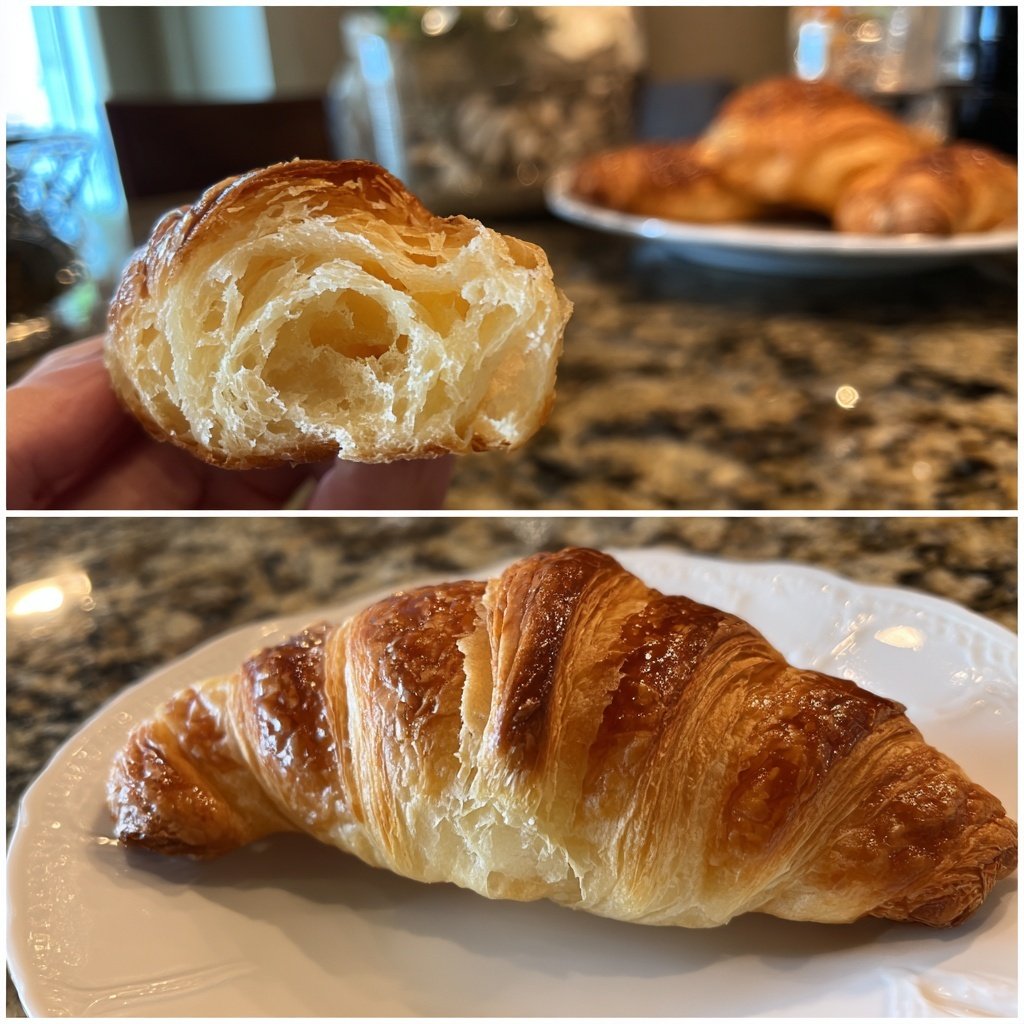
I’ve always dreamed of creating the perfect croissant, and this recipe has turned that dream into a delicious reality. After plenty of trial and error, I finally mastered the flaky, buttery layers that we all crave in a classic French croissant. The method requires patience and precision, but the reward is undeniably worth it. Each bite pulls apart beautifully, leaving a trail of tender pastry that just melts in your mouth. It’s a labor of love that’s sure to impress anyone fortunate enough to taste it.
My journey to creating the perfect croissant was filled with ups and downs, but every moment of toil was immensely satisfying. I learned that the secret lies not just in the ingredients but in the technique. Folding and rolling the dough meticulously leads to those signature flaky layers that make croissants irresistible.
One tip I discovered is to ensure your butter is at the right temperature—firm yet pliable is key. This allows it to incorporate into the dough perfectly without melting away, resulting in beautifully risen pastries that elevate any breakfast table.
Why You Will Love This Recipe
- Flaky texture with layers that pull apart beautifully
- Buttery aroma fills your kitchen as they bake
- Perfect for breakfast, brunch, or even a savory lunch
Mastering the Dough
The foundation of your croissant is the dough. It's essential to use high-quality all-purpose flour that provides enough protein to develop gluten, which gives the croissant its structure. Be careful not to over-knead the dough, which can lead to dense croissants. Knead until the dough is smooth and elastic, about 10 minutes, then lightly cover and allow it to rise in a warm place until it has doubled in size. This first rise is crucial for creating that airy texture we love.
When combining your dry ingredients, make sure to mix the salt and sugar well with the flour to distribute them evenly. Remember, adding salt directly on top of the yeast can inhibit its action, so ensure they are well-blended. If your kitchen is cooler, you might consider using warm water (not exceeding 40°C or 104°F) to help activate the yeast more effectively, but be cautious—too hot can kill the yeast entirely.
Butter Layer Technique
The butter layer is what gives croissants their signature flakiness. Using cold butter is crucial—it should be firm but pliable. Don’t forget to pound the butter evenly into a rectangle; this step is essential for achieving that perfect layer effect during lamination. If you find your butter is too soft or warm, pop it back in the refrigerator for a few minutes. The goal is to create a uniform layer that won't break or melt out during the folding process.
When rolling out the dough, use a well-floured surface to prevent sticking, and roll to precisely twice the size of your butter layer. This ensures that the butter is completely encased during the first fold. If your dough resistance during rolling is too high, let it rest for 5-10 minutes before continuing. This resting allows the gluten to relax, making your task easier and more effective.
Ingredients
Gather the following ingredients to start your croissant journey:
For the Dough
- 500g all-purpose flour
- 10g salt
- 40g sugar
- 10g instant yeast
- 300ml cold water
- 250g unsalted butter (for laminating)
For the Egg Wash
- 1 egg
- 1 tablespoon milk
Once you have all ingredients ready, let’s dive into the steps of making these delicious croissants!

Instructions
Follow these detailed steps to craft your perfect croissants:
Make the Dough
In a large bowl, combine flour, salt, sugar, and yeast. Gradually add cold water until a smooth dough forms. Knead for about 10 minutes until elastic, then let it rise covered for 1 hour.
Prepare the Butter Layer
While the dough rises, take the cold butter and place it between two sheets of parchment paper. Using a rolling pin, pound it into a flat rectangle about 1/2 inch thick. Chill in the fridge for 30 minutes.
Laminate the Dough
On a floured surface, roll out the dough into a rectangle, twice the size of your butter layer. Place the butter in the center, fold the dough over, and seal the edges. Roll out again, creating layers by folding. Repeat this process three times, chilling the dough in between each fold.
Shape the Croissants
Roll the dough out to a long rectangle and cut into triangles. From the base, roll each triangle towards the top tip to create a crescent shape. Place on a baking tray lined with parchment paper.
Proof and Bake
Let the shaped croissants rise for about 2 hours until doubled in size. Preheat your oven to 200°C (400°F). Brush the croissants with the egg wash made from beaten egg and milk. Bake for 15-20 minutes until golden brown.
Once baked, enjoy your homemade croissants fresh out of the oven!
Pro Tips
- For the best results, keep all your ingredients cold and one step ahead of your baking. This helps to maintain the flaky layers that make croissants special.
Proofing for Perfect Rise
After shaping your croissants, the second rise (proofing) is pivotal for achieving a light, airy product. Aim for a warm, draft-free environment; placing them in an oven set to 'proof' mode or near a warm stove can help. During this time, you'll notice the croissants grow and puff up substantially. Generally, around 2 hours is sufficient, but check for a nearly doubled size, which indicates they are ready for the oven.
Be cautious not to over-proof, as this can lead to collapsing croissants. If they become overly puffy and begin to lose shape, it can affect their texture and flakiness once baked. The ideal proof should be soft to the touch and spring back slowly when poked. If you’re short on time, a quicker proof can be performed by placing them in a slightly warm oven (around 30°C or 86°F) for about 30-45 minutes.
Storage and Reheating Tips
If you find yourself with leftover croissants, you can store them in an airtight container at room temperature for up to 2 days. For longer storage, consider freezing them. Lay the unbaked shaped croissants on a baking sheet and freeze until solid, then transfer them to a freezer bag. When you're ready to enjoy, bake them from frozen, adding a few extra minutes to the baking time, ensuring they achieve that golden-brown finish.
To refresh day-old croissants, preheat your oven to 180°C (350°F) and place them in for about 5-10 minutes. This reheating method helps to restore some flakiness lost during storage. Avoid microwaving, as it can cause the pastry to become soggy rather than crispy.
Questions About Recipes
→ Can I freeze croissant dough?
Yes, you can freeze the laminated dough before the final proof. Just wrap it tightly and thaw in the fridge overnight before baking.
→ How do I know when my croissants are done baking?
When they are golden brown and sound hollow when tapped on the bottom, they are ready to be taken out of the oven.
→ What can I fill my croissants with?
You can fill croissants with chocolate, almond paste, or even ham and cheese for a savory twist.
→ How long will croissants stay fresh?
Croissants are best enjoyed fresh, but they can be kept for up to 2 days in an airtight container. Reheat before serving for the best texture.
Classic French Croissants
Created by: Theodora Blythe
Recipe Type: Modern Meals
Skill Level: Intermediate
Final Quantity: 12 croissants
What You'll Need
For the Dough
- 500g all-purpose flour
- 10g salt
- 40g sugar
- 10g instant yeast
- 300ml cold water
- 250g unsalted butter (for laminating)
For the Egg Wash
- 1 egg
- 1 tablespoon milk
How-To Steps
In a large bowl, combine flour, salt, sugar, and yeast. Gradually add cold water until a smooth dough forms. Knead for about 10 minutes until elastic, then let it rise covered for 1 hour.
While the dough rises, take the cold butter and place it between two sheets of parchment paper. Using a rolling pin, pound it into a flat rectangle about 1/2 inch thick. Chill in the fridge for 30 minutes.
On a floured surface, roll out the dough into a rectangle, twice the size of your butter layer. Place the butter in the center, fold the dough over, and seal the edges. Roll out again, creating layers by folding. Repeat this process three times, chilling the dough in between each fold.
Roll the dough out to a long rectangle and cut into triangles. From the base, roll each triangle towards the top tip to create a crescent shape. Place on a baking tray lined with parchment paper.
Let the shaped croissants rise for about 2 hours until doubled in size. Preheat your oven to 200°C (400°F). Brush the croissants with the egg wash made from beaten egg and milk. Bake for 15-20 minutes until golden brown.
Extra Tips
- For the best results, keep all your ingredients cold and one step ahead of your baking. This helps to maintain the flaky layers that make croissants special.
Nutritional Breakdown (Per Serving)
- Calories: 300 kcal
- Total Fat: 22g
- Saturated Fat: 14g
- Cholesterol: 60mg
- Sodium: 150mg
- Total Carbohydrates: 25g
- Dietary Fiber: 1g
- Sugars: 1g
- Protein: 6g